
Electronic Leak Detection of Hot Melt Waterproofing – Central London
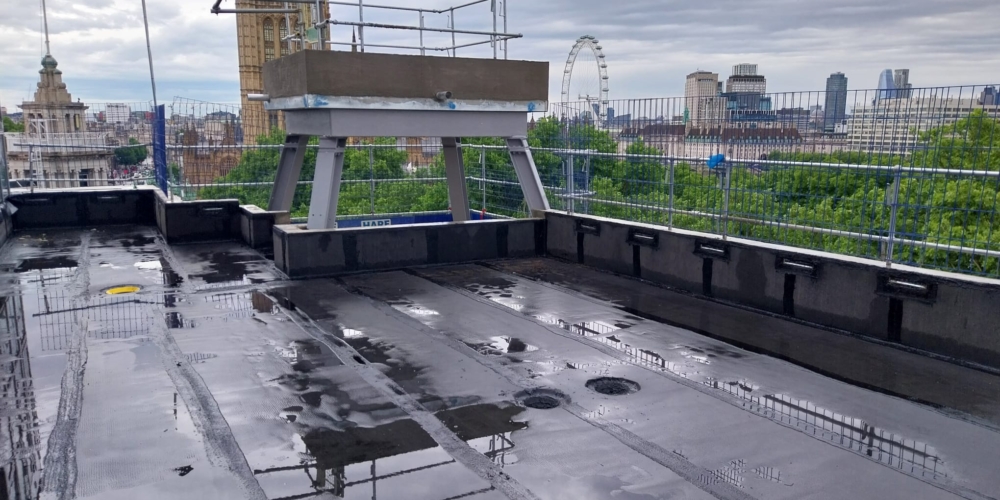
Following the installation of a hot melt waterproofing system to the roofs of a multi-storey commercial office building in central London, the client commissioned an independent electronic leak detection survey as part of a comprehensive quality assurance programme. The primary objective was to verify the integrity of the newly installed membrane before the installation of subsequent roof finishes, enabling any defects to be identified and remediated at the earliest possible stage.
Background
The development was a new build office project located in Central London, multiple roofs and terrace had been waterproofed with a hot melt system and the client required an electronic integrity test of the waterproofing to support their quality assurance process.
Hot melt systems are widely specified for commercial applications due to their seamless, self-healing properties and excellent long-term durability. However, as with any waterproofing installation, ensuring continuity of the membrane, particularly on a busy construction site, is critical to long-term performance.
The client required documented evidence of the membrane’s integrity as part of their quality assurance and warranty requirements. Consequently, electronic leak detection was specified as the most appropriate and reliable non-destructive testing method available for this application.
Methodology
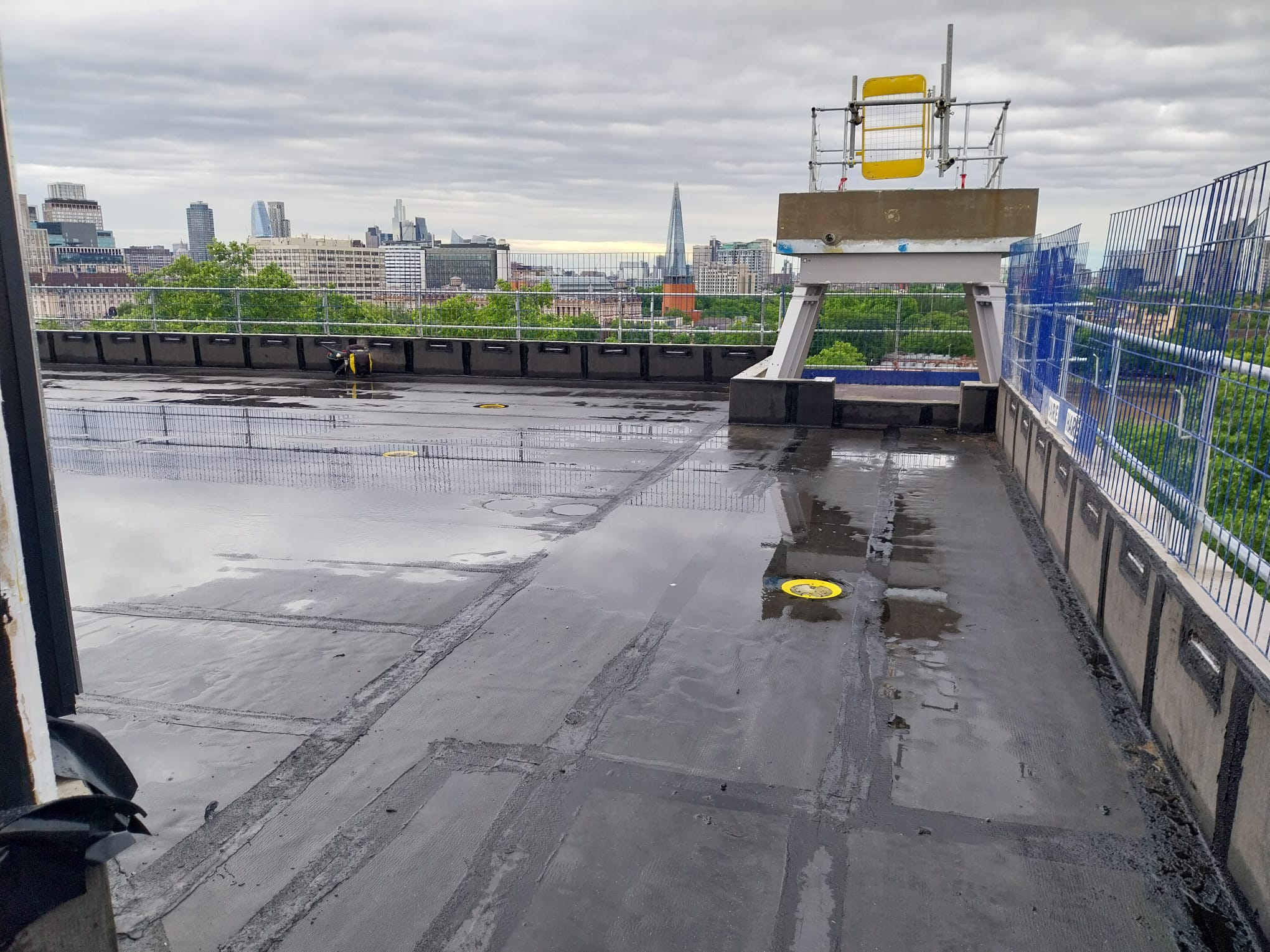
The electronic leak detection survey was carried out using the low-voltage (wet method). This technique is particularly suited to newly installed waterproofing membranes prior to the placement of protective or insulation layers, as it requires direct access to the membrane surface. It relies of the electrically insulating properties of the membrane and conductive properties of the substrate to be affective. Where the waterproofing is breached, this can be accurately located by the test equipment.
The survey process comprised the following stages:
- Pre-survey inspection: A visual inspection of the roof was undertaken prior to testing to identify any areas of obvious damage or incomplete detailing.
- System setup: A low-voltage electrical field was established across the membrane surface using the electronic leak detection equipment. A perimeter grounding wire was installed around the roof area to complete the electrical circuit.
- Water application: The membrane surface was evenly wetted using clean water from a hose to ensure full conductivity across the test zone.
- Scanning: Operatives systematically traversed the entire roof area using hand-held probes connected to the detector unit. Any breach in the waterproofing layer completed the electrical circuit to ground, triggering a visual indication on the detector unit. The precise location of each breach was recorded on a roof plan.
- Breach marking: All detected breaches were clearly marked on the membrane surface to enable targeted remediation by the waterproofing contractor.
- Re-test: Once all breaches had been repaired by the roofer, the area was retested to confirm the system as watertight before installation of finishes.
Findings
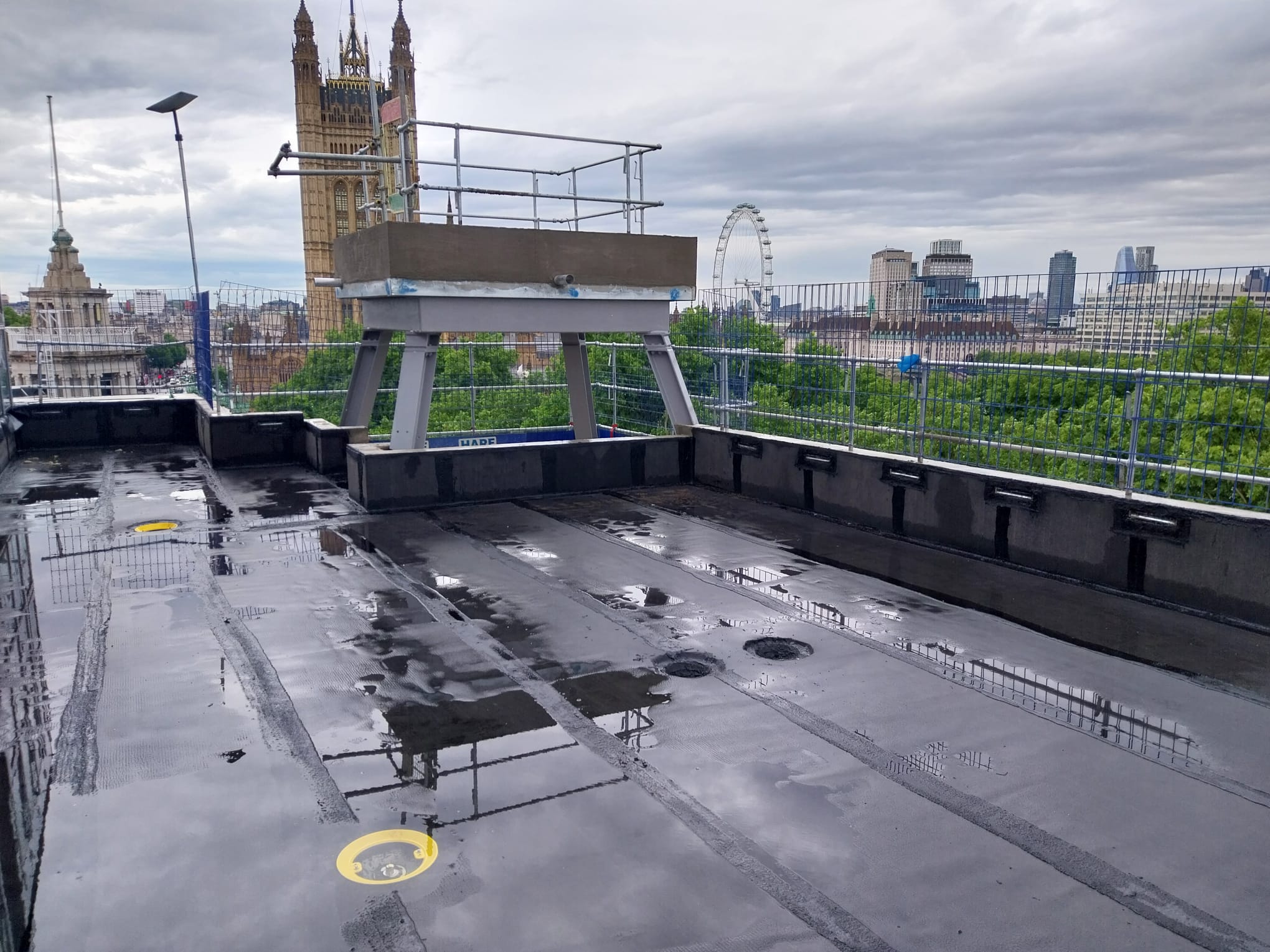
The survey was undertaken to the hot melt waterproofing across the main roof deck, parapet upstands, and associated detailing. The survey identified a total of three breaches, all of which were damage to the field sheet, attributable to site damage.
All breaches were repaired by the roofing and retested, confirming the waterproofing system to be watertight.
Outcome
The client received a comprehensive report detailing our pre- and post-remediation findings, supported by annotated roof plans and photographic evidence. The report was incorporated into the contractor’s quality assurance records and submitted in support of the waterproofing manufacturer’s product warranty.
Conclusion
This project demonstrates the value of electronic leak detection as an integral part of the quality assurance process for commercial waterproofing installations. On a busy building site such as this, it is not uncommon for small areas of damage to occur to finished waterproofing systems from site traffic or following trades. Electronic leak detection efficiently pinpoints these defects, enabling contractors to carry out targeted repairs with minimal disruption to the programme of works. For commercial buildings in demanding urban environments such as central London, this approach supports best practice in waterproofing quality assurance.
Our Accreditations